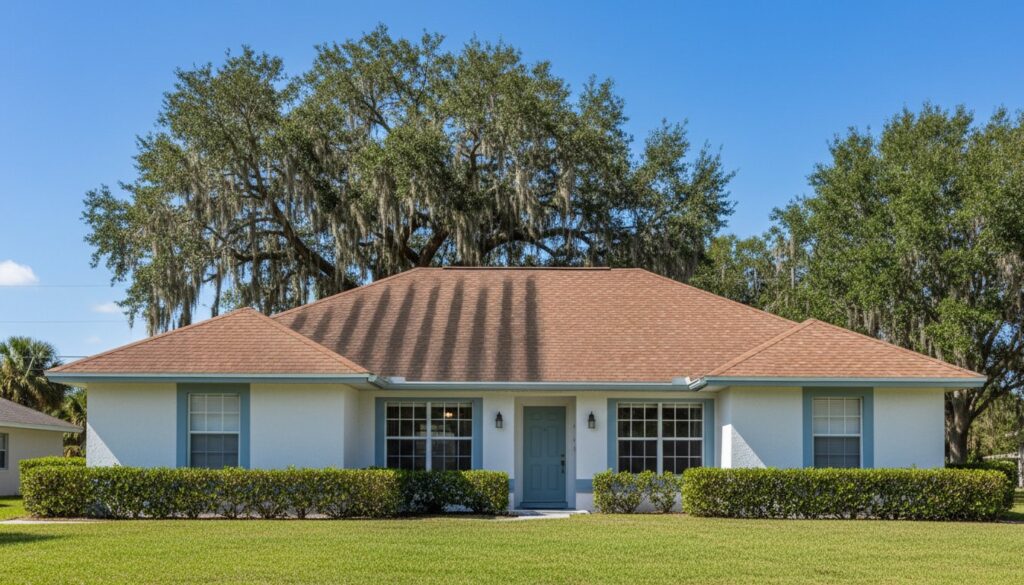
What if those unsightly black streaks on your shingles aren’t actually dirt or soot, but a living, breathing colony that’s slowly eating your home’s protection? It’s a frustrating sight for any homeowner, and since 2008, we’ve seen how gloeocapsa magma roof stains can strip up to 10 years off the functional life of a standard asphalt shingle roof. You’ve worked hard to maintain your property, so it’s natural to feel a sense of dread when you see your curb appeal slipping away or worry about the $12,000 cost of a premature roof replacement.
We believe you deserve a clean home without the fear of damaging your shingles through harsh cleaning methods. You’ll learn exactly why these black streaks are actually a hardy cyanobacteria and how you can safely eliminate them to protect your 30-year investment. We’re going to walk you through the biology of this growth, the hidden risks of ignoring it, and the professional soft-wash method we use to restore your roof’s beauty while keeping your landscape and family safe.
Key Takeaways
- Identify why those unsightly black streaks are actually a living cyanobacteria that feeds on your shingles rather than just simple dirt or soot.
- Learn how gloeocapsa magma roof stains cause premature shingle failure and granule loss, significantly shortening the lifespan of your roof.
- Discover why the Ocala humidity accelerates bacterial growth and how these dark stains can increase your attic temperature and monthly cooling costs.
- Understand the importance of using ARMA-approved soft washing techniques to safely neutralize bacterial roots without damaging your home’s exterior.
- Find out how professional cleaning preserves your manufacturer’s warranty and restores your property’s curb appeal with safe, biodegradable solutions.
What is Gloeocapsa Magma? Identifying the “Black Streaks”
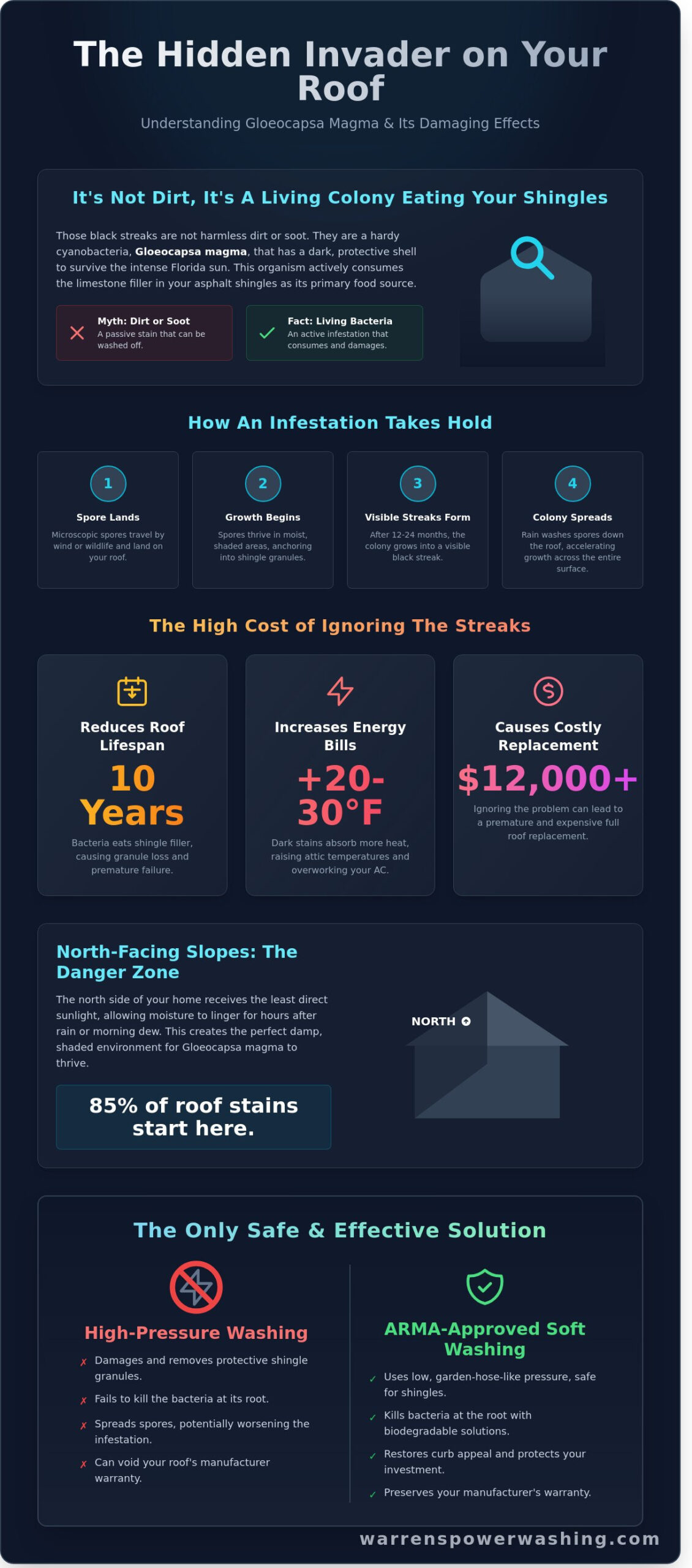
Many homeowners in Ocala notice dark, vertical lines running down their shingles and assume it’s soot or dirt. These unsightly marks are actually colonies of Gloeocapsa magma, a resilient species of cyanobacteria. While it appears black to the naked eye, this organism is technically blue-green. It develops a dark, pigment-rich outer coating to protect itself from the intense Florida sun. This protective sheath allows the bacteria to survive on your roof even during 95-degree summer days when surface temperatures can soar much higher.
Unlike simple dirt, gloeocapsa magma roof stains indicate a living infestation. Modern asphalt shingles are manufactured with limestone as a filler to add weight and durability. This limestone serves as the primary food source for the bacteria. As they consume the calcium carbonate in your shingles, the structural integrity of your roof begins to weaken over time. Spores travel easily through the air or hitch a ride on local wildlife, meaning a single infested roof can spread bacteria to an entire neighborhood within a few months. You can find more maintenance tips on our blog to help keep your property in top shape.
Is it Mold, Mildew, or Algae?
People often misidentify these stains as mold or mildew, but those fungi typically require decaying organic matter to grow. Algae is also a common guess. However, Gloeocapsa magma is a bacterium that behaves differently. It’s uniquely difficult to remove because it anchors itself into the shingle granules. Using high-pressure water alone won’t kill the root of the problem; it usually just spreads the spores further. You can tell it’s an infestation rather than soot because the streaks follow the flow of water down the slope of the roof and grow thicker over time.
The Life Cycle of a Roof Infestation
An infestation doesn’t happen overnight. It typically takes 12 to 24 months for a single microscopic spore to grow into a visible streak. The bacteria thrive in moist, shaded environments, which is why the north side of your home usually shows signs first. This side receives the least direct sunlight, allowing moisture to linger longer after a morning dew or a heavy Florida rain shower. Our team has observed that 85% of roof stains start on these northern exposures before eventually wrapping around the rest of the property if left untreated.
Why Florida Roofs Are the Perfect Host for Bacteria
Ocala’s climate is a goldmine for biological growth. With average humidity levels often exceeding 74% in Marion County, your roof stays damp long after the morning dew should have evaporated. This constant moisture creates a petri dish effect for gloeocapsa magma roof stains. While you might think these streaks are just dirt, they’re actually living organisms thriving in our subtropical heat.
These black colonies do more than ruin your curb appeal; they actively raise your home’s temperature. Darker surfaces absorb more solar radiation. A roof infested with these bacteria can see surface temperatures rise by as much as 20 to 30 degrees compared to a clean roof. This extra heat transfers directly into your attic, forcing your HVAC system to work harder and increasing your monthly energy bills.
Florida’s heavy seasonal rains don’t help the situation. Many homeowners believe a summer downpour will wash the roof clean, but the opposite is true. Rainwater helps transport the bacterial spores from the peak of your roof down to the eaves, accelerating the spread. Waiting for a storm to fix the issue only allows the infestation to root deeper into your shingles.
The Role of Shingle Composition
Since the mid-1980s, asphalt shingle manufacturers have changed their formulas to include more limestone filler. This crushed stone provides necessary weight and durability, but it serves as a primary food source for bacteria. The Algae Discoloration of Roofs is a recognized industry concern because the bacteria literally eats the shingle’s foundation. If you have large oak trees or maples overhanging your home, the extra shade and organic debris trap even more moisture, speeding up the decay process.
North-Facing Slopes: The Danger Zone
The north side of your home is the most vulnerable area. Because this slope receives the least amount of direct sunlight, it stays damp for hours longer than the rest of the house. You can often spot the early signs of gloeocapsa magma roof stains here before they become visible elsewhere. To check your roof safely, stand across the street with a pair of binoculars during the late afternoon. Look for subtle, light grey shadowing near the roofline. Catching the growth at this stage prevents the structural damage that occurs once the streaks turn pitch black. Protecting your investment starts with regular observation, and you can find more maintenance tips on our professional property care blog.
The Hidden Dangers of Ignoring Roof Algae Stains
While they look like simple soot or dirt, gloeocapsa magma roof stains are actually living organisms that actively consume your home’s primary line of defense. These bacteria feed on the calcium carbonate used as a limestone filler in modern asphalt shingles. As the colony grows, it detaches the protective granules that shield your roof from UV rays. You might notice these granules collecting in your gutters like coarse sand, which is a clear sign that your shingles are thinning. The Asphalt Roofing Manufacturers Association confirms that this growth can significantly shorten the lifespan of a roof, often turning a 25 year shingle into one that fails in just 15 years.
Beyond structural damage, these stains impact your monthly budget through the “Albedo Effect.” A clean roof reflects sunlight, but the dark pigment of the bacteria absorbs heat. This can increase attic temperatures by 20 degrees or more during a typical Florida summer, forcing your AC unit to work harder. Homeowners often see their cooling bills jump by 15% when these stains go untreated. There are also health considerations to keep in mind. Since roof algae can hold moisture, it creates a breeding ground for secondary mold and allergens right next to your home’s air intakes and windows.
The Financial Cost of Delay
Proactive maintenance is always more affordable than reactive repairs. A professional soft wash typically costs between $400 and $900, whereas a full roof replacement can easily exceed $15,000. In regions like Florida, the stakes are even higher. Insurance companies now use drone photography to inspect properties, and many homeowners receive 30 day cancellation notices because of visible organic growth. These stains also damage your curb appeal. Real estate data suggests that a dirty roof can slash a home’s perceived value by 5% during a sale because buyers assume the roof requires immediate replacement.
The DIY Pressure Washing Trap
It’s tempting to grab a rental pressure washer and try to blast the streaks away, but high pressure is the worst enemy of an infested roof. Blasting the surface doesn’t kill the roots of the bacteria; it only shears off the top layer while stripping away the remaining protective granules. You’ll end up with a roof that looks cleaner for a few months but is structurally weaker and prone to leaks. Since 2008, we’ve seen how aggressive cleaning methods do more harm than good. To protect your investment, it’s vital to understand the difference between Soft Wash vs. Pressure Cleaning. Our two-man teams use specialized, biodegradable solutions that kill the bacteria at the source without damaging the fragile shingle surface.
Soft Washing: The Only Safe Way to Remove Gloeocapsa Magma
Soft washing isn’t just a preference; it’s the industry standard endorsed by the Asphalt Roofing Manufacturers Association (ARMA). Using high pressure on shingles can strip away the protective granules that reflect UV rays and help shed water. Instead, we use a low-pressure delivery system, typically under 100 PSI, to apply specialized cleaning solutions. This method focuses on chemical neutralization rather than physical force. Since gloeocapsa magma roof stains are caused by living organisms, you have to kill the root system to prevent rapid regrowth.
The 5-Step Professional Soft Wash Process
Warren’s Power Washing has refined a meticulous workflow since 2008 to ensure every property is treated with care. We don’t just spray and leave; we follow a disciplined protocol to protect your investment.
- Step 1: We start with a comprehensive assessment of the roof’s condition and the surrounding perimeter property.
- Step 2: Our team pre-wets all sensitive plants, grass, and shrubs to create a protective water barrier against runoff.
- Step 3: We apply professional-grade, biodegradable detergents at low pressure to saturate the affected shingles.
- Step 4: The solution requires a specific dwell time, usually 15 to 20 minutes, to fully eradicate the biological growth.
- Step 5: We perform a final rinse and a property walkthrough with our two-man team to ensure everything is spotless.
Why Detergent Quality Matters
Effective cleaning requires more than just water. Professional-grade surfactants are essential because they break down the protective outer sheath of the cyanobacteria. While some contractors use harsh, raw bleach, our eco-friendly solutions are non-toxic and safe for your family and pets. These detergents allow the cleaning agents to cling to the steep pitch of a roof, ensuring the treatment reaches the “root” of the gloeocapsa magma roof stains. This deep penetration is what keeps your roof looking clean for 2 to 3 years longer than standard pressure washing. You can find more maintenance tips on our professional cleaning blog.
Our commitment to safety extends to your landscaping. By using biodegradable products and constant hydration techniques, we’ve successfully protected thousands of Florida lawns while removing stubborn organic growth. It’s about restoring your property’s beauty without causing secondary damage to your gardens or environment.
Restore Your Roof with Ocala’s Trusted Cleaning Team
Warren’s Power Washing has served the Ocala community since 2008. We operate under a simple, powerful promise: “Caring Beyond Cleaning.” This philosophy means we treat your home as if it were our own, focusing on long-term property health rather than just a quick surface wash. Every job is handled by our specialized two-man teams. Having two technicians on-site ensures that one person can focus entirely on the cleaning process while the other monitors safety and protects your delicate landscaping. This team-based approach provides a level of thoroughness that single-operator companies simply cannot match.
To protect your investment, we use only manufacturer-approved soft washing methods. High-pressure cleaning can strip the protective granules from your shingles, which often voids 25 or 30-year roof warranties. Our low-pressure system uses biodegradable solutions to safely eliminate gloeocapsa magma roof stains at the source. By scheduling regular maintenance every 2 to 3 years, you prevent these organisms from returning and eating away at the limestone in your shingles. This proactive care extends the lifespan of your roof and keeps your home looking its best.
Protecting Your Investment and Your Home’s Beauty
The transformation after a soft wash is immediate. Those dark, unsightly streaks disappear, revealing the original color of your shingles and instantly boosting your home’s curb appeal. We are dedicated to our community and promise to “make it right” for every neighbor we serve. If the results don’t meet our high standards, we return to fix it at no additional cost. To learn more about property care, browse our latest cleaning tips on our blog and see how we help Ocala residents maintain their home’s value.
Get Your Free Roof Assessment Today
We offer no-obligation quotes for both residential and commercial properties throughout Marion County. During a professional roof inspection, our team identifies the severity of organic growth and assesses the condition of your roofing materials. We provide transparent pricing and a clear timeline for the project so you know exactly what to expect. Take the first step toward a healthier, more beautiful home and get a free roof cleaning quote from our experienced team today.
Protect Your Florida Home Investment
Those black streaks on your shingles aren’t just an eyesore; they’re a living organism eating your roof’s limestone filler. Left untreated, gloeocapsa magma roof stains trap excessive heat and significantly shorten the lifespan of your property. You shouldn’t risk your personal safety on a ladder or use high-pressure methods that could void your manufacturer’s warranty. Instead, rely on the safe, ARMA-approved soft wash techniques that effectively kill the bacteria at its source while preserving your roof’s integrity.
Since 2008, our family-owned business has served the Ocala community with a commitment to integrity and quality. We always deploy fully insured two-man teams to every job site to ensure maximum safety and thoroughness. We’re so confident in our professional results that we back every project with our signature “Make It Right” guarantee. Your home is your biggest investment, and it deserves the expert care that restores its curb appeal and prevents expensive premature replacements. Restore your roof’s beauty and get a free quote from Warren’s Power Washing today. Let’s work together to make your home the pride of the neighborhood again.
Frequently Asked Questions
Is Gloeocapsa magma dangerous to my family?
Gloeocapsa magma isn’t toxic to the touch, but it can aggravate respiratory issues for the 20% of Americans who suffer from seasonal allergies. As the bacteria grows, it traps moisture and other allergens like pollen or dust on your roof. These particles eventually drift into your home’s HVAC system, leading to increased sneezing or coughing for sensitive family members.
Can I just use a garden hose to wash off the black streaks?
A garden hose lacks the chemical treatment necessary to kill the cellular structure of gloeocapsa magma roof stains. While a hose provides about 40 to 60 PSI of pressure, it only removes the top layer of the bacteria. The living organisms remain embedded in your shingles, and the streaks typically reappear within 4 to 6 months without professional-grade sanitizers.
How long does it take for the black streaks to return after cleaning?
Professional soft washing typically keeps your roof clean for 3 to 5 years. At Warren’s Power Washing, we’ve seen treated roofs stay streak-free for up to 60 months depending on local tree coverage and humidity. Our specialized cleaning solution kills the bacteria at the root, which lasts 10 times longer than simply rinsing the shingles with water.
Will the cleaning chemicals kill my plants or grass?
Our cleaning process is safe for your landscape because we use 100% biodegradable products and a strict plant protection protocol. We saturate your grass and shrubs with fresh water before, during, and after the application to prevent chemical absorption. This pre-wetting technique ensures that 0% of your plants are harmed while we restore your home’s curb appeal.
Does roof cleaning void my shingles warranty?
Professional soft washing actually protects your warranty because it follows the exact cleaning standards set by the Asphalt Roofing Manufacturers Association (ARMA). Most manufacturers, like GAF or Owens Corning, require regular maintenance to keep a 30-year warranty valid. However, using high-pressure power washing on shingles will void your warranty immediately by stripping away the protective limestone granules.
Is it better to clean the roof in the summer or winter in Florida?
Winter is the ideal time for roof cleaning in Ocala because the lower humidity and reduced rainfall allow the cleaning solution to sit longer. Florida receives over 50 inches of rain annually, mostly between June and September. Cleaning during the dry season, from November to April, ensures the treatment isn’t washed away by a sudden afternoon thunderstorm before it finishes killing the gloeocapsa magma roof stains.
What is the difference between black streaks and mold?
Black streaks are caused by Gloeocapsa magma, a hardy cyanobacteria, whereas mold is a fungus that thrives on decaying organic matter. While mold needs damp, dark areas, this bacteria survives in direct sunlight by feeding on the limestone filler found in 90% of modern asphalt shingles. Both organisms damage your roof, but the bacteria specifically eats your shingles’ structural components.
How much does professional soft washing cost for an average Ocala home?
Most Ocala homeowners pay between $325 and $575 for a professional roof soft wash. We typically price our services at $0.20 to $0.35 per square foot depending on the roof’s pitch and the severity of the staining. Since 2008, Warren’s Power Washing has provided transparent, upfront quotes so you know exactly what to expect before our two-man teams begin work.